Frederick Alexander and Burrell Scott were enslaved on the same Mississippi plantation, ran away together seeking freedom, and died in service to the Union Army during the Civil War.
Frederick Alexander was born around 1828 in Wilmington, North Carolina. Burrell Scott was born around 1839, likely in Mississippi. Both men were enslaved on the Holly Grove Plantation in Centreville, Wilkinson County, Mississippi, owned by James A. Stewart. Holly Grove was a large cotton-producing plantation, where in 1860, 234 enslaved people were held in bondage in 60 slave cabins.

On September 1, 1863, Frederick Alexander and Burrell Scott fled Holly Grove Plantation and reached Port Hudson, Louisiana, where the Union Army had established a stronghold. The battle for Port Hudson ended in July of that year with a Union victory, making it one of the final pieces in securing the entire Mississippi River. It was also a beacon for enslaved men ready to enlist. Frederick and Burrell joined the 12th Corps d’Afrique, later redesignated as the 84th Regiment of the United States Colored Infantry (USCI). Once they enlisted, they were no longer property. They were free men.
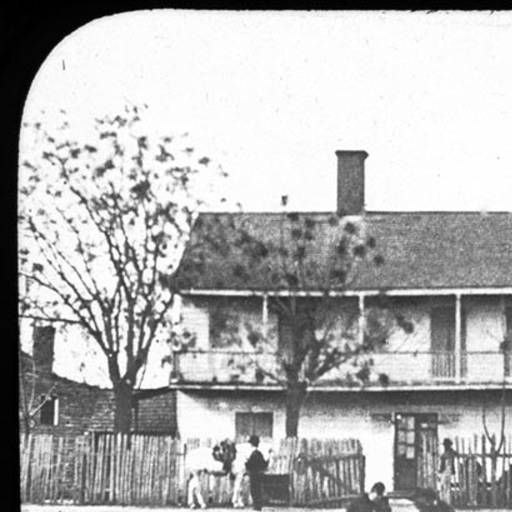
Neither man would survive the war. On January 12, 1864, after just four months of service, Frederick Alexander died of pneumonia in the regimental hospital at Port Hudson. Two days later, on January 14, Burrell Scott died, also of pneumonia. Like thousands of Black soldiers, they succumbed not in battle but to the brutal conditions and lack of adequate medical care that plagued the Union camps.
“Port Hudson National Cemetery is located on the site where Union and Confederate forces were engaged in the siege of Port Hudson. Nearly 4,000 Union troops were killed and almost all were buried in the cemetery; only 600 were known. Approximately 500 Confederate soldiers died during the battle and were buried in the trenches where they fell. The present grounds were first used as a cemetery in 1863. In 1866, the federal government appropriated 8.4 acres and declared the site a national cemetery. Casualties of the siege of Port Hudson and soldiers who died in nearby military hospitals were interred here. In 1871, a cemetery inspector reported that the hostile adjacent-land owner would not permit a ditch to be run across his property to drain the cemetery.” This is taken from National Cemetery Association, U.S. Department of Veteran Affairs (https://www.cem.va.gov/cems/nchp/porthudson.asp)
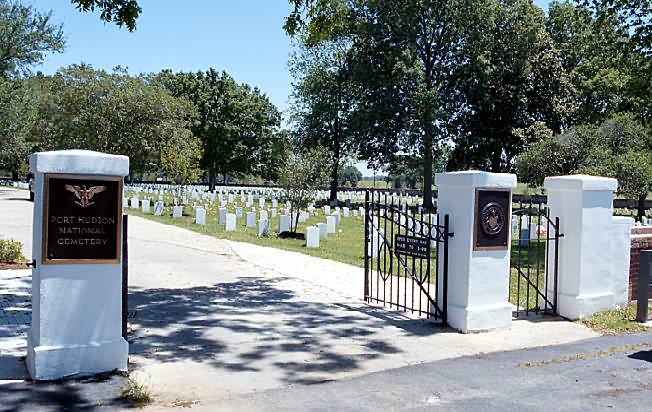
Port Hudson National Cemetery
Today, neither Frederick Alexander nor Burrell Scott has a headstone in Port Hudson National Cemetery. Their names do not appear on the cemetery’s Roll of Honor, a government list of soldiers who died in the Civil War and are buried at the site. Their exact burial locations are unknown. The African American Civil War Memorial in Washington, D.C. identifies both men’s names on plaque C-90 along with others from the 84th USCI. Let us say the names Frederick Alexander and Burrell Scott aloud so that they will always be remembered.
Thank you for this very enlightening information. We salute and honor Frederick Alexander, Burrell Scott and all USCT and Union Soldiers! The USA is the home of the free, because of these brave men who fought in the Civil War.
Thanks Joyce.
Thank you for honoring Mr. Frederick Alexander and Mr. Burrell Scott by
sharing their story and educating us through this medium. Your blog has served as history lessons for me. I have learned so much from the stories you share.
Keep teaching these lessons. They matter!
Thanks Vernita.
Hello Alvin. Interesting article. My paternal great-grandmother was a Stewart from Centreville, MS. This very useful information to me.
Thanks, Mama Dou- Baton Rouge.
Hey Jackie, we need to talk when you get some time.
I say their names, Fredrick Alexander and Burrell Scout, aloud. As always cousin Alvin, I am forever learning our history and forever discovering the rich history of our regent. I honor their courage to dream of freedom and to take action by joining the 84th USCI. The unfortunate death and resting place of these soldiers and others is a sad ending. I am in the area at this time. As I pass through Port Hudson today on Hwy 61, I will have a different appreciation for the area now and I will say their names aloud and pray in their honors. Thank you cousin Alvin for your amazing discoveries.
Thanks Jackie. Go to https://www.findagrave.com/cemetery/68636/port-hudson-national-cemetery and search to see if any of your folks are buried there.
Thank yo for this very inportant info.
You’re welcome Shelley. Glad you got something out of it.
I just saw ont he 1870 Census some Alexander Children in the same HH as William Veal. I believe Their mother is Kitty Veal.
Hey cousin. I trust all is well. I wrote about Fred Alexander here – https://almostdisappeared.com/frederick-alexander-a-beloved-son-in-law/
Thanks,
Yes, I read that actually before this one and I have been trying to follow the family after the 1870 Census. I have located Kitty Veal in the household of Kiah Brackenridge in 1880, 1900, 1910, 1920. I haven’t ventured further in the census records. Most of the children listed in the 1870 Census were also listed in 1880, but under the surname Brackenridge. In each census thereafter the names are badly altered (spelling) however, I was able to determine that Kitty and Kiah continued to live in the same house hold. I love the way that you have honored our ancestors. I too will strive to dive deeper with your help to piece our family tree together. Thank you.
Kitty stated in the pension file that she had four children for Fred Alexander before he died. Mary, born in 1859, was the youngest, You are correct, the children after Mary are the children of her new husband Hezekiah Braxton or Brackenridge. He is listed in the 1870 census as the son of Nancy Braxton of Virginia. Hezekiah (Kiah) died in 1927.