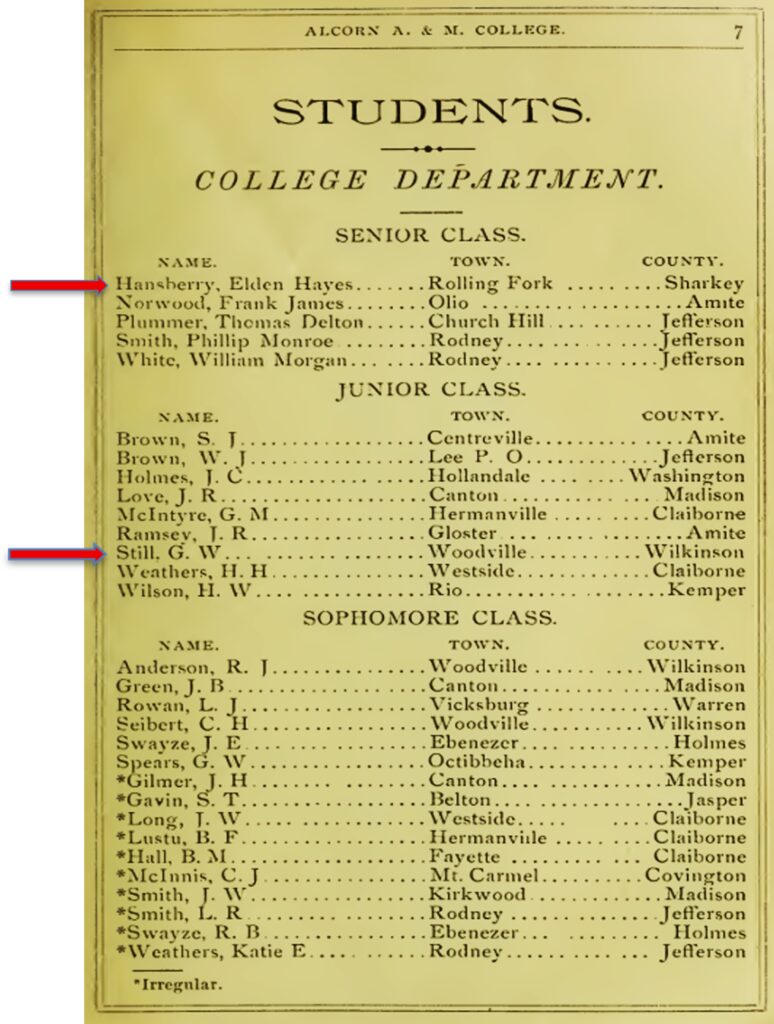
In 1871, the year William Grant Still was born in Woodville, Mississippi, Alcorn Agricultural and Mechanical College was founded. Hiram R. Revels, the first person of African descent to serve in the U.S. Senate, became Alcorn’s first president. Alcorn, located in Claiborne County, Mississippi, became the first Black land-grant college established in the United States and represented an opportunity for Black students in the Mississippi River Valley—from nearby Vicksburg, Port Gibson, Woodville, and Gloster—to attain higher learning in mathematics, science, English, music, animal husbandry, farming, carpentry, blacksmithing, beekeeping, and many other disciplines from trained professors. Alcorn served as a training ground for early Black Reconstruction-era teachers who returned to their hometowns to educate their communities. One historic alumnus, Elden Hayes Hansberry, father of the great African history scholar William Leo Hansberry and grandfather of Lorraine Hansberry, author of A Raisin in the Sun, enrolled at Alcorn during the 1887–1888 school term and graduated in 1891. (1)
The Alcorn College catalogues document William Grant (W. G.) Still’s entrance and completion of his studies at Alcorn. Still attended Alcorn’s preparatory school in 1887, then enrolled in the four-year college program in 1888. By his junior year, he had distinguished himself as the student leader of the Brass Band at Alcorn. After graduating in the 1892–1893 academic year, he accepted a teaching position at Huntsville Alabama Normal School (now Alabama A&M), where he taught vocal music, band music, and bookkeeping. He and the legendary blues musician W. C. Handy are noted in Alabama A&M’s band history for their contributions to the development of the early band.
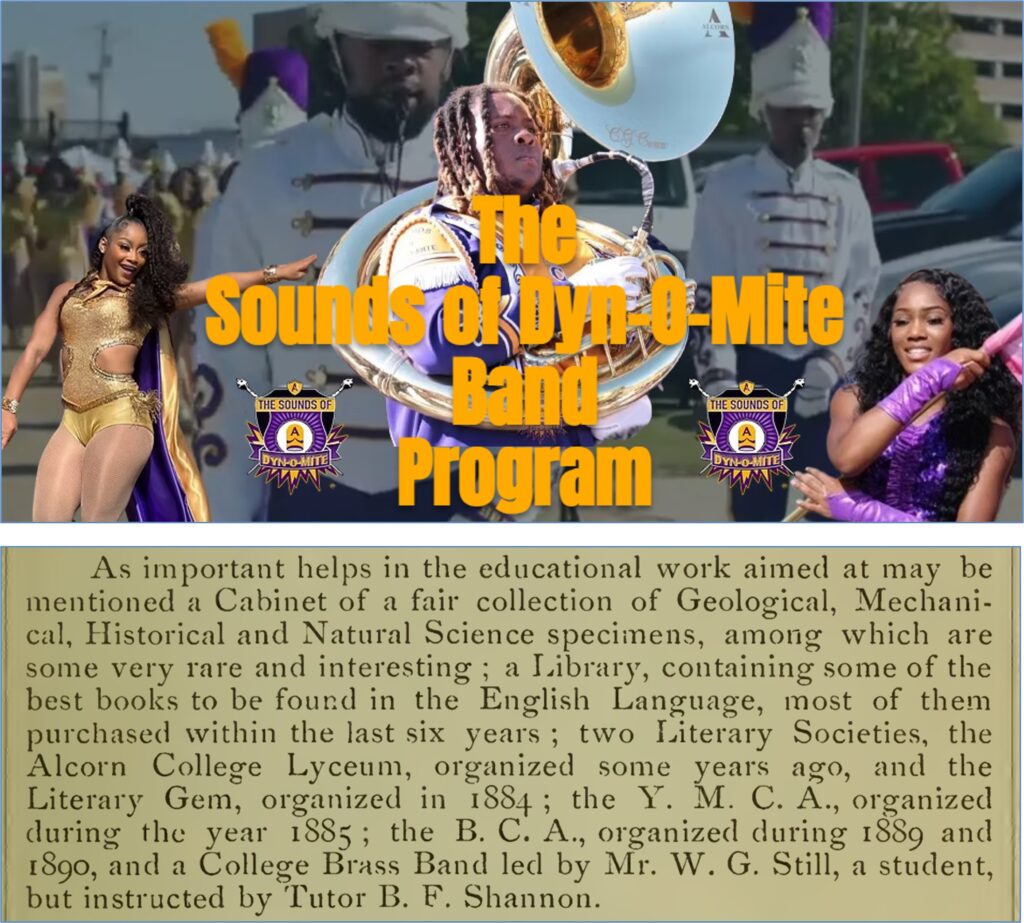
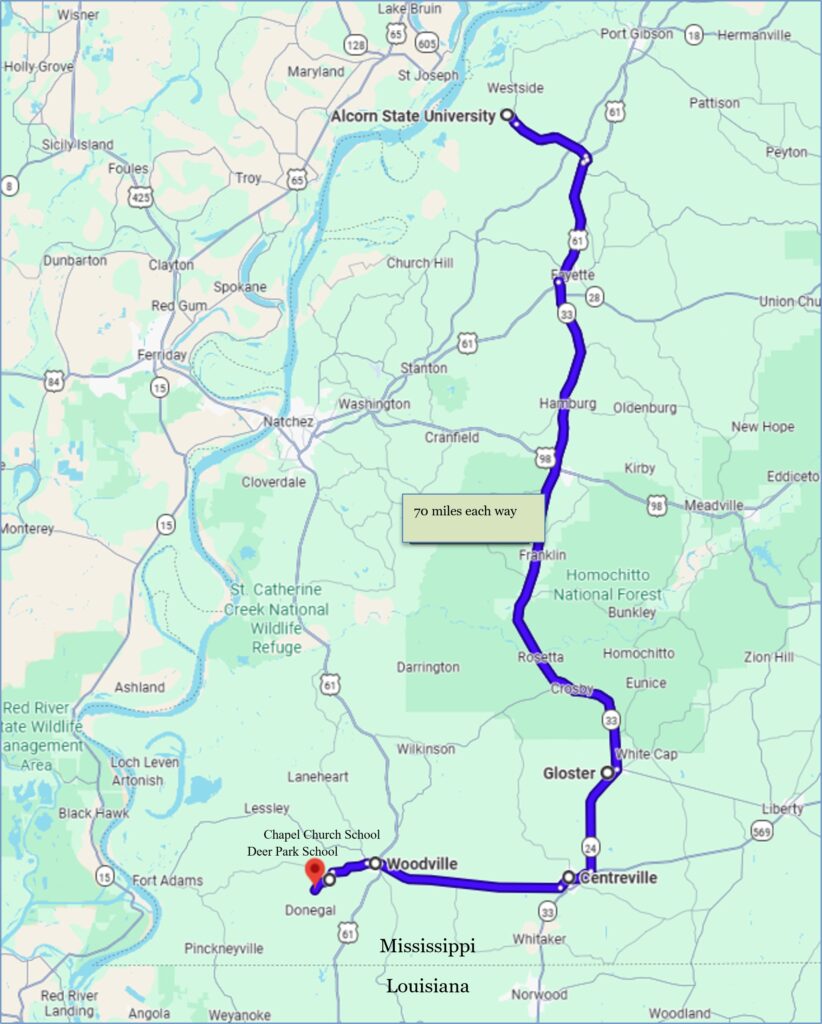
At Alabama A&M, Still met his future wife, Carrie Lena Fambrough, an 1887 Atlanta University graduate in English who was then teaching bookkeeping and instrumental music. They decided to move back to Woodville, where they were married on June 25, 1894, and began teaching at schools and churches in the area. Still taught at Alcorn in Claiborne County, Gloster in Amite County, and at Bayridge, Chapel, and Steward schools in Wilkinson County. (3,4)
Chapel Church School, established in 1891 and located about four miles west of Woodville’s town center, was the home church of my McQuerter family, who were enslaved on the Still plantation. “Steward” or “Stewart,” located about two miles southwest of Chapel Church on Donegal Road, was the old plantation site of James A. Stewart, son of Duncan Stewart, who brought my enslaved Veal family into Mississippi in 1809. In 1883, Deer Park School along with the now Mt. Olive Baptist Church, were on a 1.5-acre plot donated by the Veal family members, who purchased land from James A. Stewart in 1869. Still Sr. helped fill a huge void in the education of this small town, and generations later, that tradition and commitment to education remained. My mother’s teacher at Deer Park in the early 1940s was Cousin Preston Veal, who attended the sub-preparatory program at Alcorn in 1891–1892. My Aunt Bernetta Payne, a 1967 elementary education Alcorn graduate, taught for over 30 years at the current Wilkinson County High School.
Williams’s sudden death, at home, in bed, on September 26, 1895, at a time when violence and terrorism was commonplace against Black educators in nearby Gloster and other places throughout the South, left the family believing he was murdered. Soon after his death Carrie Still took their son, William Grant Still, the future composer and moved to Little Rock, Arkansas, after living in Woodville for a little over a year. She married Charles Shepperson and became a teacher and community organizer, making a profound impact on Black primary, secondary, and higher education in Little Rock. Her life as an educator and activist is documented in a new book released on October 6, 2026, Freedom’s Daughters: How a Generation of Black Women Resisted Oppression Through Literacy and Education, written by her great granddaughter Celeste Headlee. Carrie died in 1927 when their son was 32 years old, but she kept the memories of her husband alive.
Inside the story of William Grant Still Sr. is a large part of the story of Black education in Woodville and similar places throughout the South. Education and knowledge of self are always resisted by systems of oppression. May William Grant Still and Carrie Lena Fambro Still Shepperson always be remembered!
Noted Sources
- Coleman, J. Janice. “The Road to A Raisin in the Sun: The Hansberry Family of Gloster, Mississippi, and Its Link to Alcorn A&M College.” Journal of Mississippi History 87, no. 1 (2025). https://aquila.usm.edu/jmh/vol87/iss1/3/.
- Alcorn Agricultural and Mechanical College. Catalogue of the Officers and Students of Alcorn Agricultural and Mechanical College, 1891–1892. Lorman, MS: Alcorn Agricultural and Mechanical College, 1891–1892, 7, 25.
- Still, William Grant. My Life, My Words: The Autobiography of William Grant Still, American Master Composer. With additional material by Judith Anne Still. Flagstaff, AZ: The Master-Player Library, 2011.
- Headlee, Celeste. Freedom’s Daughters: How a Generation of Black Women Resisted Oppression Through Literacy and Education. New York: Flatiron Books, 2026.
Next: Duncan Still – Still Plantation
© 2026 Alvin D. Blakes. All rights reserved. Suggested citation: Alvin D. Blakes, “William Grant Still Sr. in Woodville 1888–1895,” Almost Disappeared, published October 21, 2026, https://almostdisappeared.com.