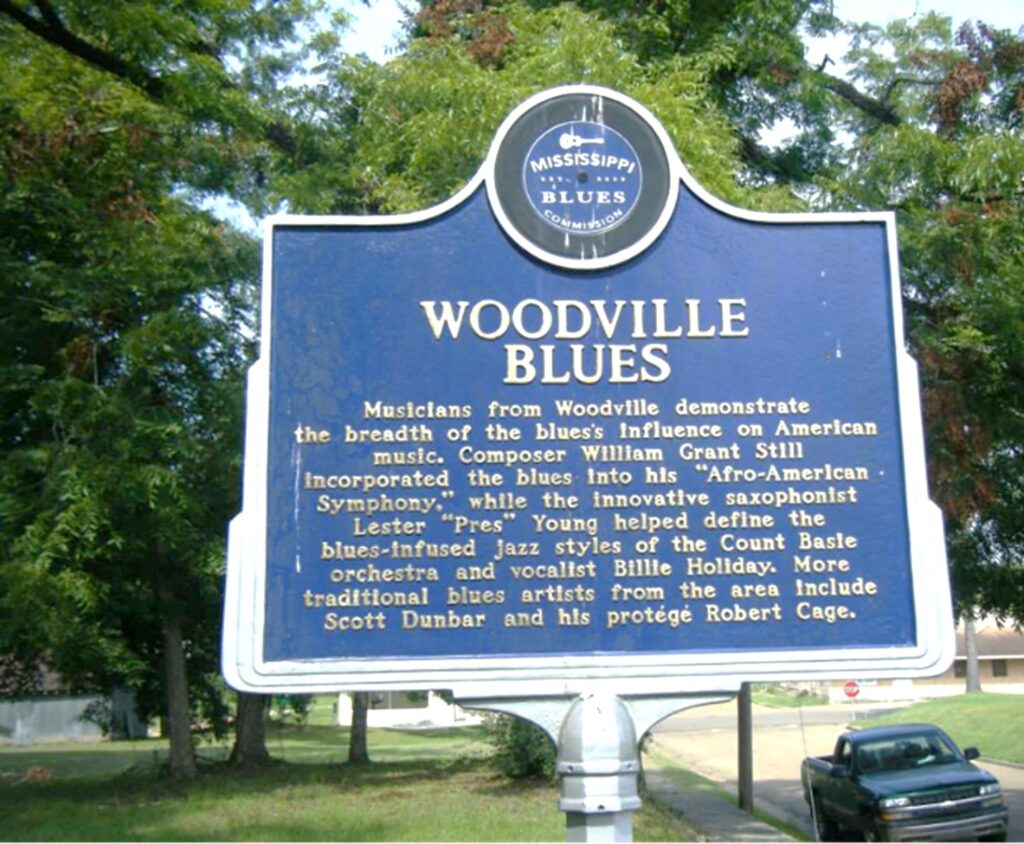
I have never been a big listener of Western classical music. I was born in New Orleans and grew up in Baton Rouge, Louisiana. My musical memories were of rhythm and blues played at school dances and on jukeboxes, AM radios, and record players. I spent many summers in Woodville, Mississippi, and, like many people in the Deep South, we tuned in nightly to WLAC in Nashville to hear John R. and Ernie’s Record Mart, where they played the latest and greatest music out of New Orleans, Memphis, and towns throughout the South.
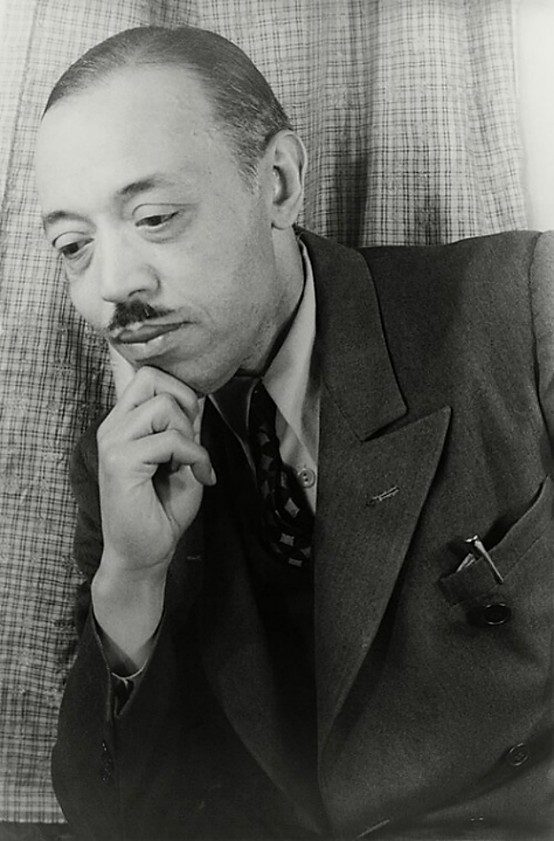
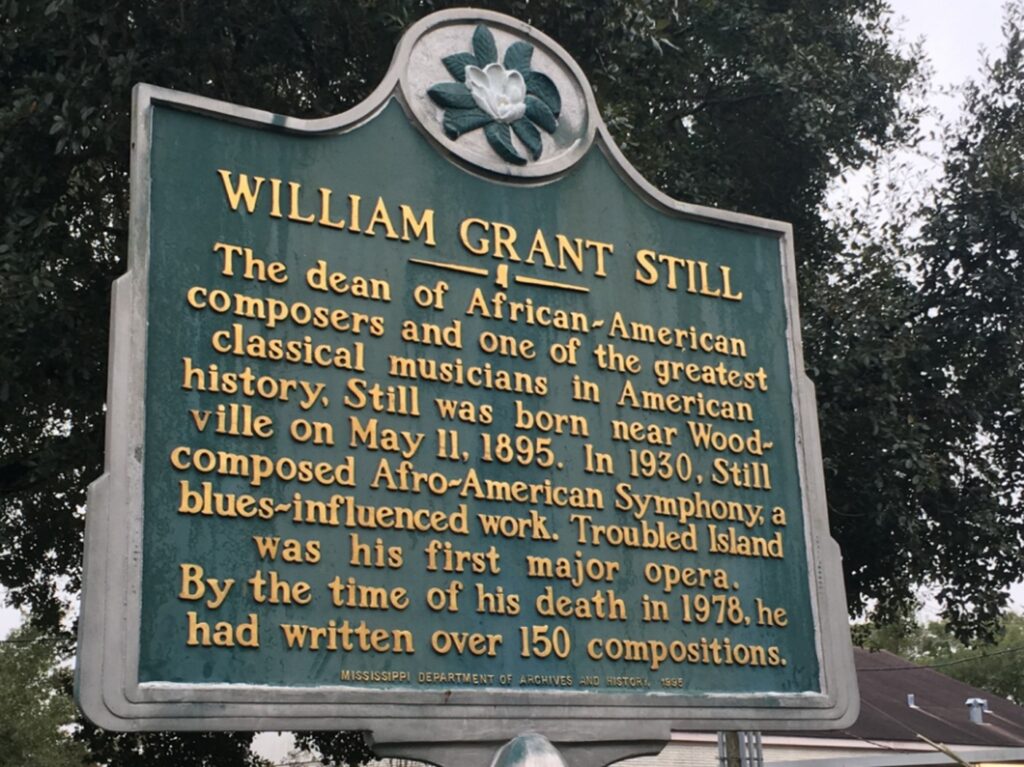
William Grant Still Jr. was born in Woodville on May 11, 1895, to William Grant Still Sr. and Carrie Lena Fambro Still. Most biographies state this basic fact and then quickly leave Still’s Woodville origins behind. Little has been written about the Still family’s genealogy and history, William Grant Still Sr.’s life in Woodville, or the community that shaped the family before the composer’s national career began. His collaborations with Harlem Renaissance poet Langston Hughes and blues legend W. C. Handy helped bring the richness of African American culture, especially the blues, into the world of classical music.
William Grant Still’s life and symphonic music simply were not part of the culture of my Louisiana and Mississippi upbringing. That changed as I deeply researched my family’s history in Wilkinson County. The Still name appeared in plantation records, Civil War pension files, and oral histories connected to the same community where my McWhorter (McQuerter) ancestors had been enslaved. Eventually, I realized that the legendary composer had roots in the same small Mississippi town—and, in fact, on the same plantation and forced-labor camp—as my McWhorter family, and that it was there that his family took the Still surname.
My family research intersected with the Still family through the Civil War pension file of my great-great-grandfather, Philip McWhorter, who was born in 1844 and enlisted in the 81st Regiment, United States Colored Infantry, in New Orleans, Louisiana, in 1865. Philip died in May 1899, and his wife, Patsy Williams McWhorter, died in December of the same year. Their minor children then applied for survivors’ pension benefits. The resulting pension claim was denied by the Pension Bureau but later reopened and continued until 1930. It included testimony from multiple witnesses who recalled Philip and his family living on the “Still Place” or “Still Plantation.” Milly Turner, the half-sister of Philip McQuerter, was born into slavery around 1855. On October 22, 1930, in Baton Rouge, Louisiana, she gave a deposition in the pension application for Philip McQuerter’s minor children, stating the following:
“I was born and reared on the Still Plantation, Wilkinson Co., MS…Philip McQuerter’s owner was Thomas J. Brown, and he was also my owner. Philip was reared on the Still Place. Philip used the name of Philip Brown during slavery, and after the war he took the name of Philip McQuarter. I guess McQuarter was the name of his father, but I don’t know that for a fact. Philip McQuerter (or Brown) had only one wife and her name was Patsy. I don’t know her maiden name. Philip and Patsy were married during slavery. I couldn’t tell you who married them. I was not a witness to the marriage. They were married on the Still Place. They were man and wife when I first knowed them.”
This blog series is intended to ask and, hopefully, provide answers to the following questions: Who were William Grant Still’s enslaved ancestors? What is the story of William Grant Still Sr. and Carrie Fambro? How did Woodville shape the family’s musical heritage? What became of the Still family after emancipation? And why has this Wilkinson County story remained untold?
I am not writing to claim a family relationship with William Grant Still. Instead, I hope to understand how a child born in rural Wilkinson County became one of the greatest classical composers, and what genealogy can reveal about the people and place that made that journey possible. I will not attempt to retell William Grant Still’s well-documented musical career. Instead, I will look backward—from the famous composer to the largely unexplored family and community in Woodville from which he emerged.
© 2026 Alvin D. Blakes. All rights reserved.Suggested citation: Alvin D. Blakes, “William Grant Still of Woodville, Mississippi,” Almost Disappeared, published July 2026, https://almostdisappeared.com.
Next: William Grant Still Sr.—Teacher, Scholar, Bandmaster, Mathematician, and Businessman of Woodville.

Thank you Alvin for sharing your remarkable research once again. It does far more than document genealogy, it restores voices, reconnects families to their history, and reminds us that behind every historical figure is a community whose stories deserve to be remembered. I especially appreciate your commitment to understanding William Grant Still’s roots rather than simply celebrating his accomplishments. That viewpoint gives more meaning to his extraordinary legacy. Reading about the connections between the Still family, the McWhorter family, and the history of Woodville deepened my appreciation for how history, music, and family are woven together across generations. Your careful use of pension records, oral histories, and local archives demonstrates the power of patient, respectful research to uncover stories that have too often remained untold. As I was reading your article, I was reminded of the Morgan Freeman Symphonic Blues Experience, which celebrates the profound influence of the Blues on American music and traces how those traditions continue to shape our cultural identity. Your work beautifully complements that message. Again, thank you for preserving these stories with such care
and generosity.
Linda. Thanks for your wonderful comments. It lets me know that I have communicated many of my thoughts and feelings about my research. William Grant Still Jr.’s story, though it is in plain sight, is masked behind our disconnect with symphonic music.
I am so relieved that your website is back “up and running”! Your email response was right on time and led to your treatment of William Grant Still’s life.
It is my hope that you will be most successful in uncovering the early life of Mr. Still and his family. You can bet that I will be checking your blog in
anticipation of your next update. Happy hunting!
Albert Dennis
July 19, 2026
Thanks Albert.
Alvin, you hit another home run❤️ Your stories are always so entertaining, educational, and engaging. And you are writing history in real-time with your research efforts. Thank you for keeping us all informed.
As always, thank you for reading and for your support.
Love your work. Looking forward to follow-ups.
Thank you for reading and commenting.
I look forward to learning about William Still’s family roots. Pension files are such a wonderful source of information and the more we learn about the communities that our people were a part of during slave days, the more we understand them and their times.
Thanks Kristin. My goal is to be very specific in merging my family stories into the broader history.